
ENTERPRISE NETWORKING
ICT networking can be categorized based on geographical area, network infrastructure components, and architecture. Each category relies on specific equipment (hardware and software) to function.


Enterprise Networking
Networks are commonly classified by their geographical span:
Personal Area Network (PAN): Covers a very small area around an individual (e.g., within 10 meters). Used for connecting personal devices like a smartphone to wireless earbuds or a computer to a Bluetooth keyboard.
Local Area Network (LAN): Connects devices within a limited area such as a home, office, or single building. This is the most common and widely used type for internal, high-speed communication and resource sharing. A Wireless LAN (WLAN) uses radio waves to provide connectivity.
Campus Area Network (CAN): Interconnects multiple LANs within a limited geographical area, such as a university or corporate campus.
Metropolitan Area Network (MAN): Spans a city or a large town, connecting various LANs using high-speed infrastructure like fiber optics.
Wide Area Network (WAN): Connects networks over large geographical areas, such as countries or continents. The Internet is the largest example of a WAN.
Virtual Private Network (VPN): Extends a private network securely over a public network (like the internet) using encryption and tunneling protocols.
Networking Devices
Network infrastructure comprises hardware, software, and services that enable connectivity.
These devices facilitate data transmission and management within and between networks:
Routers: Forward data packets between different networks (e.g., a home network and the internet) based on IP addresses, determining the most efficient path.
Switches: Connect multiple devices within the same network segment. They intelligently forward data only to the intended destination device using MAC addresses, unlike hubs which broadcast data to all ports.
Hubs: Obsolete multi-port devices that connect multiple Ethernet devices and broadcast all incoming data to all other devices in the network segment.
Modems: Convert digital signals from a computer into analog signals for transmission over analog media (like phone or cable lines) and vice versa.
Network Interface Cards (NICs): Hardware components (often integrated into the motherboard) that allow a computer to connect to a network via a cable (Ethernet NIC) or wirelessly (Wi-Fi NIC).
Wireless Access Points (WAPs): Enable devices to connect to a wireless network (WLAN) using Wi-Fi signals.
Repeaters/Extenders: Amplify or regenerate network signals to extend the coverage range.
Bridges: Connect two separate network segments and filter traffic between them based on physical (MAC) addresses.
Firewalls: Act as security sentinels, monitoring and controlling incoming and outgoing network traffic based on predefined security rules to prevent unauthorized access.
Gateways: Act as an entry and exit point, connecting two networks that use different protocols, enabling communication between disparate environments.
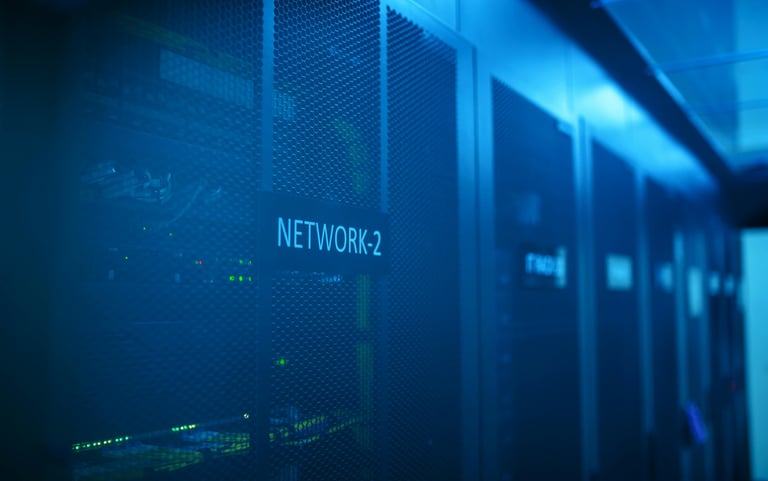

Network Equipment
Physical Transmission Media
These are the physical pathways through which data travels:
Network Cables: Such as Ethernet cables (Cat5e, Cat6, fiber optics) used for wired connections.
Connectors: Devices like RJ45 connectors used to terminate network cables.

CONTACT
Reach out for tailored ICT solutions.
Phone
+234-909-228-7308
© 2026 Bridgemax Tech. All rights reserved.
BRIDGEMAX TECHNOLOGIES
Empowering your business with expert ICT infrastructure solutions and services.
14 Ezenwa Close, off Peter Agha Street, Oke-Afa, Lagos, Nigeria.